License Plate★★★★★
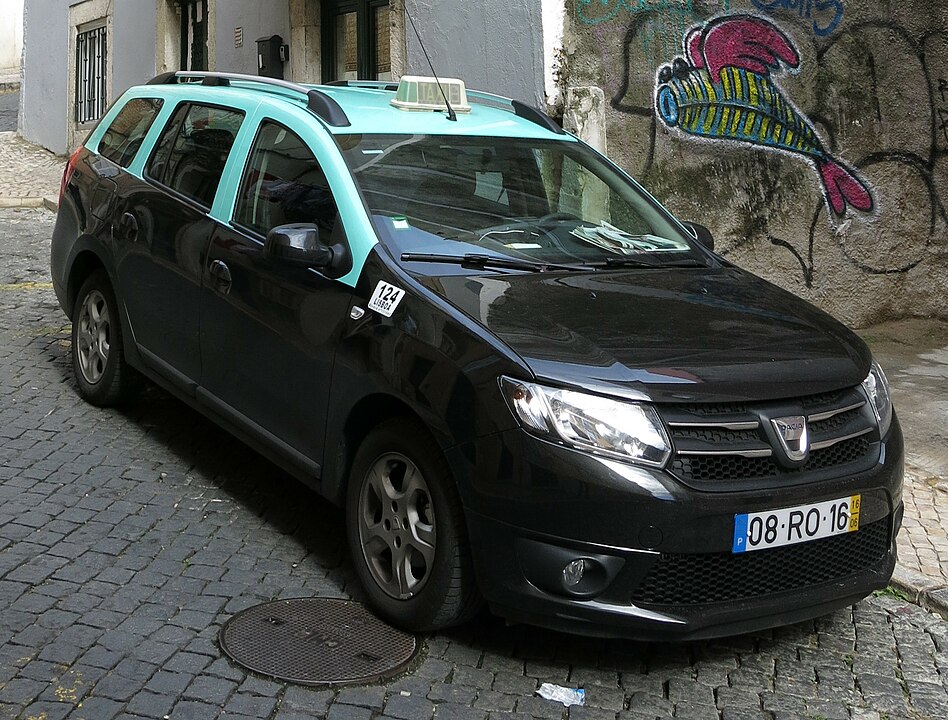
License plates have a yellow strip on the right.
NoteThis plate style is no longer issued and is gradually disappearing.
Examples1
 Portugal
Clues that work anywhere in this area
License plates have a yellow strip on the right.
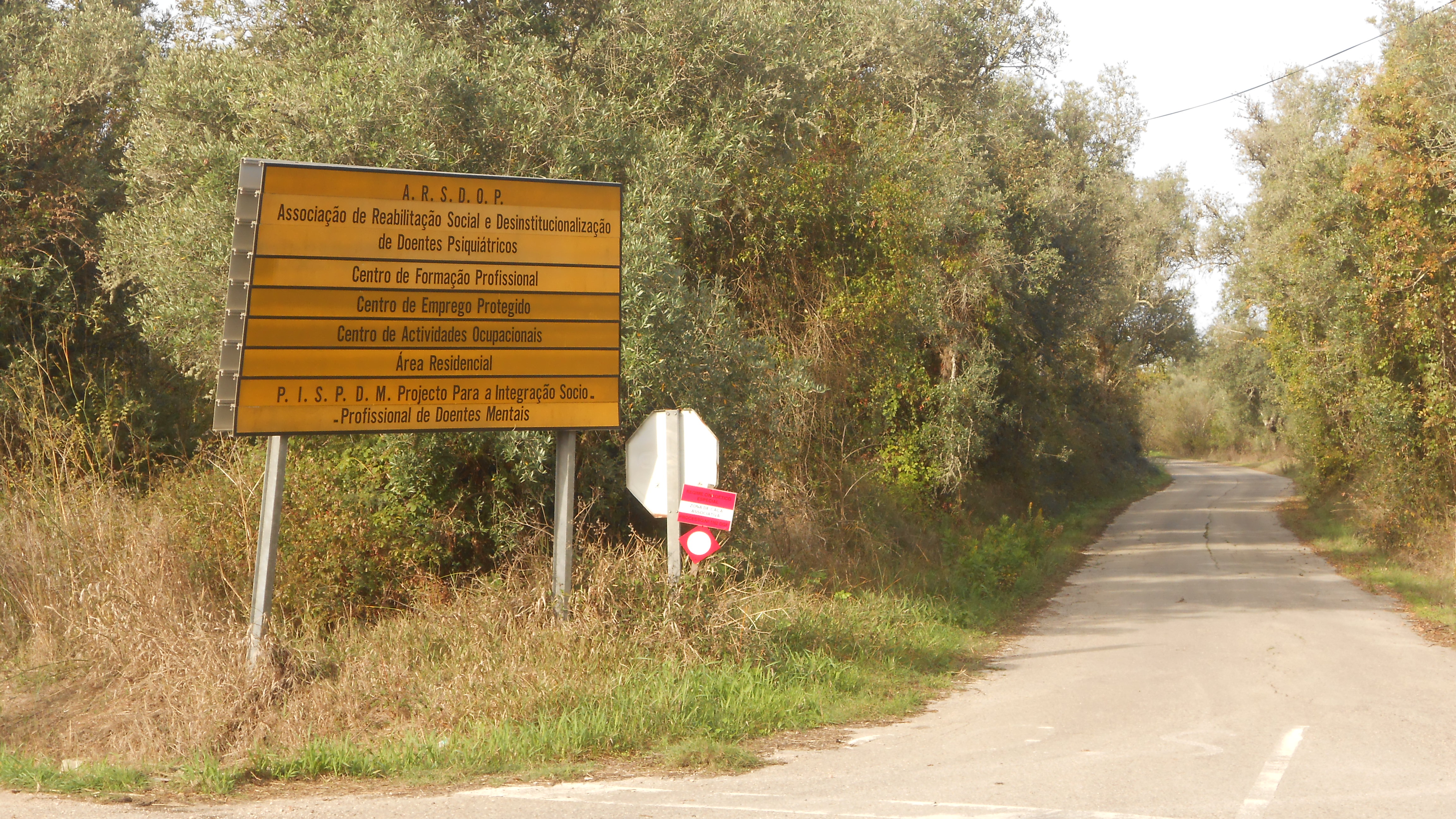
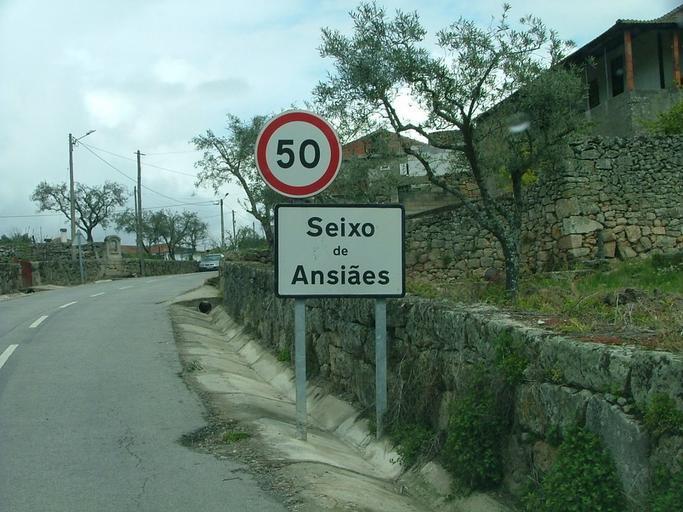
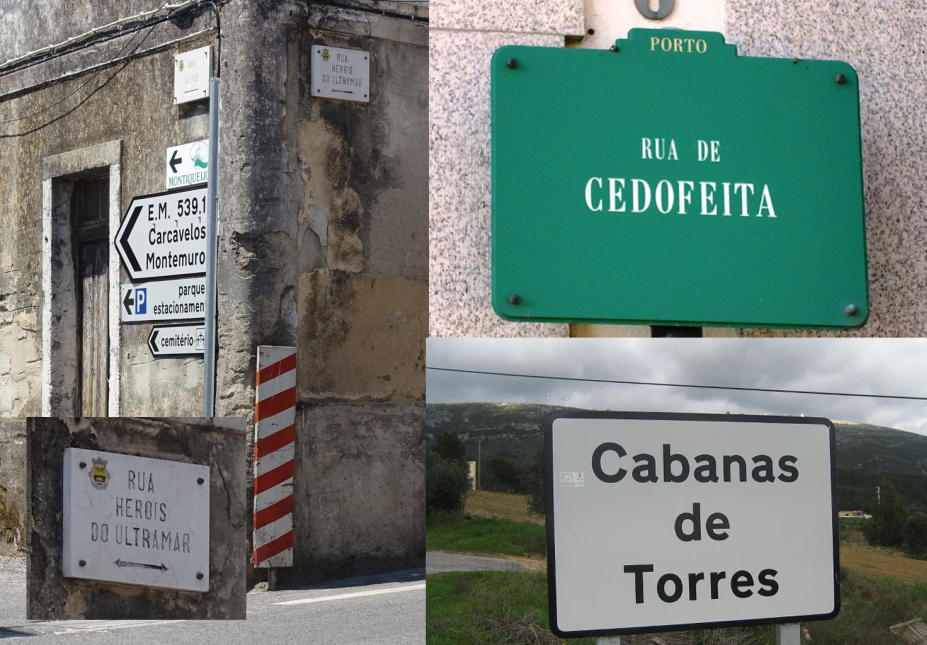
Portuguese text can be spotted by the distinctive letters "Ã/ã," also used in Brazil.
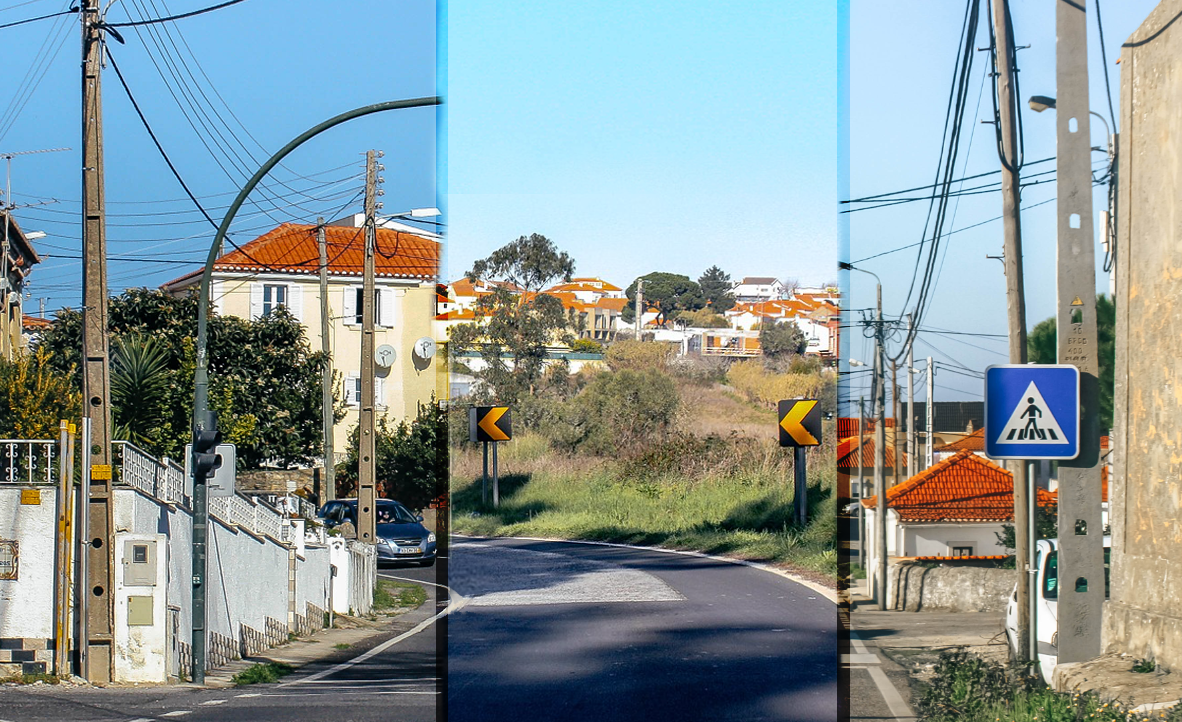
The pedestrian crossing sign shows a figure wearing a belt at the waist.
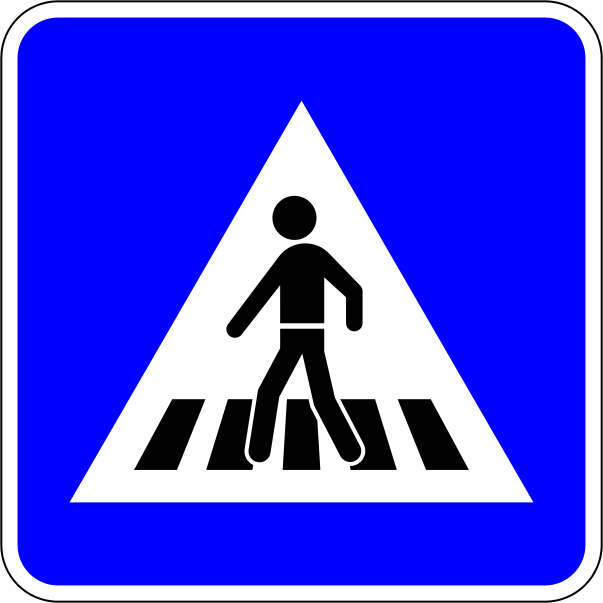
In warm-looking European scenery, a black background with yellow chevrons is almost always Portugal.

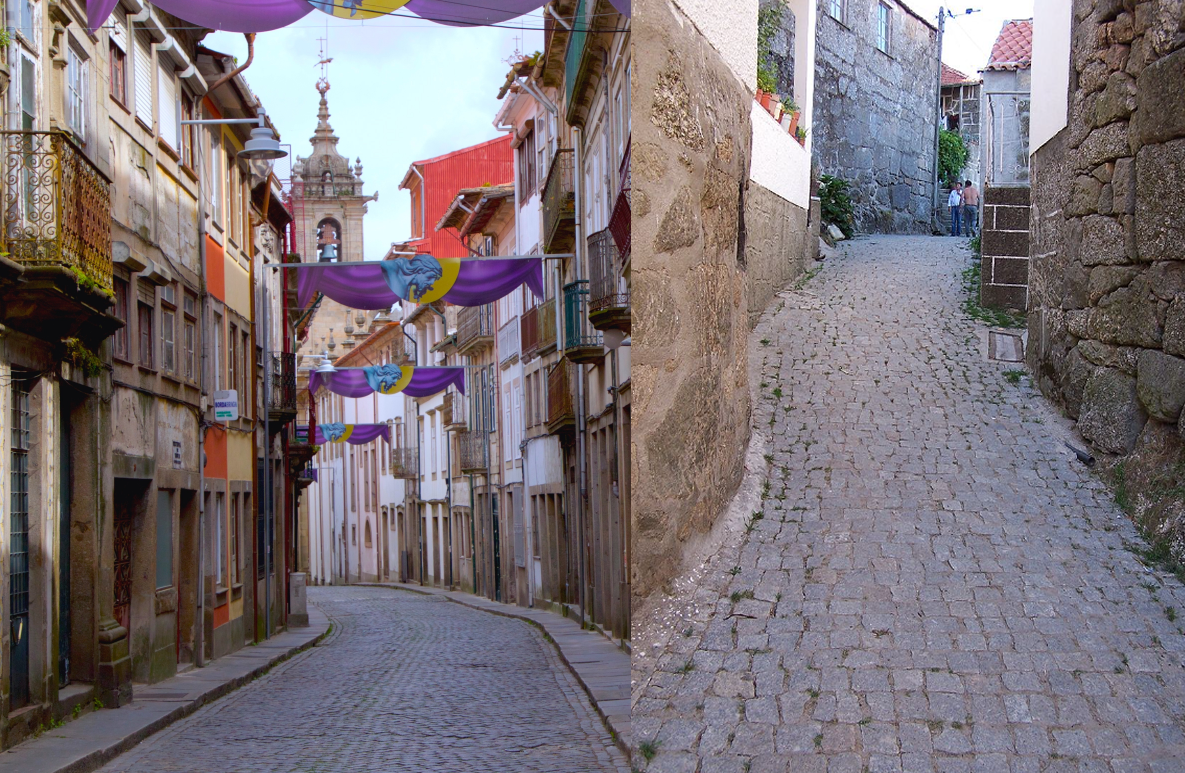
"No hunting without permission" signs show a red diamond with a white dot. There are a few variations of these red-and-white signs.
Once you know the area: which part of it
Area Code
Phone area codes are assigned by region. When a number shows up on a sign, an advert or a van, its leading digits narrow the location down to a part of the country.
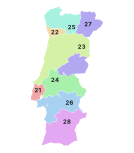 Coloured by leading digit
Where Northern half clues apply3
Click an item to jump to its clueTap to show the range; tap again or → to jump to the clue
If it looks humid or rocky, it's likely the northern half. Inland areas in particular have more trees, and ferns and moss often grow there too.
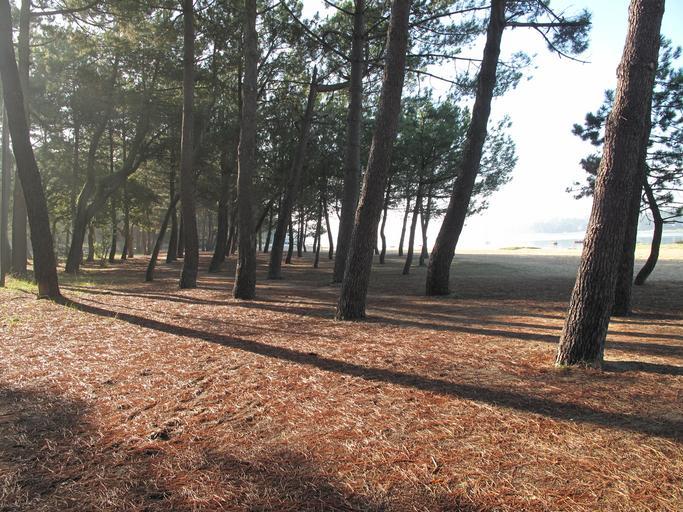
The maritime pine (Pinus pinaster), a tall pine species, seems to be more common in the north.
Trees with straight, thin trunks and pale, peeling bark, and long, drooping gray-green leaves, planted in dense rows, mean a eucalyptus plantation. Especially common in the hills of the central region (Aveiro, Coimbra, etc.).
Where Agriculture clues apply5
Click an item to jump to its clueTap to show the range; tap again or → to jump to the clue
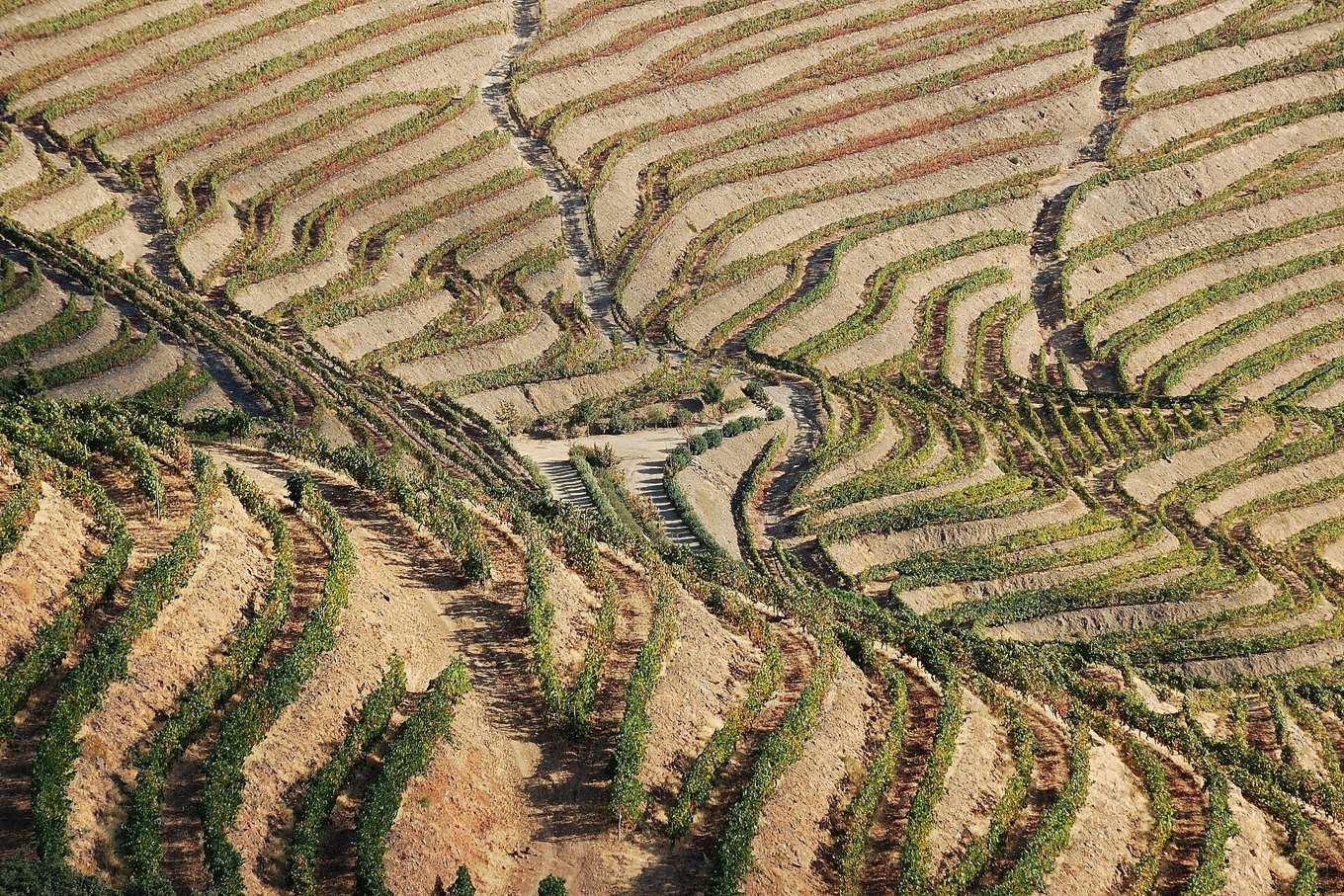
Terraced vineyards carved densely from top to bottom on both sides of a deep river valley mean the Douro Valley. Low stone retaining walls run along each terrace, built of gray schist with vertical cleavage.
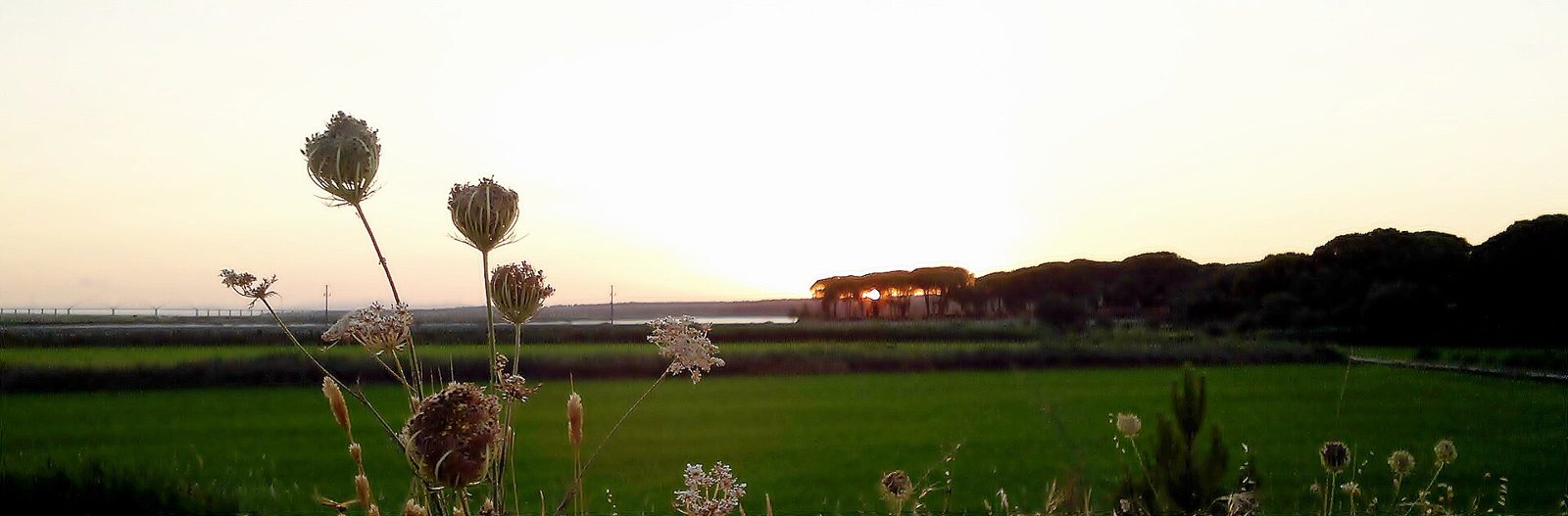
Flat, flooded plots divided by straight irrigation channels, with a low embankment only around the edge, mean rice paddies. They are limited to alluvial lowlands near river mouths, concentrated in the valleys of the Tejo and Sorraia, Sado, and Mondego rivers.
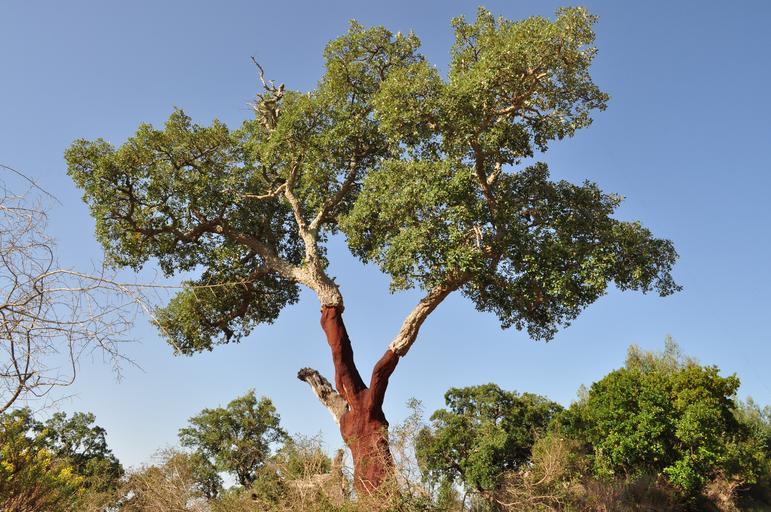
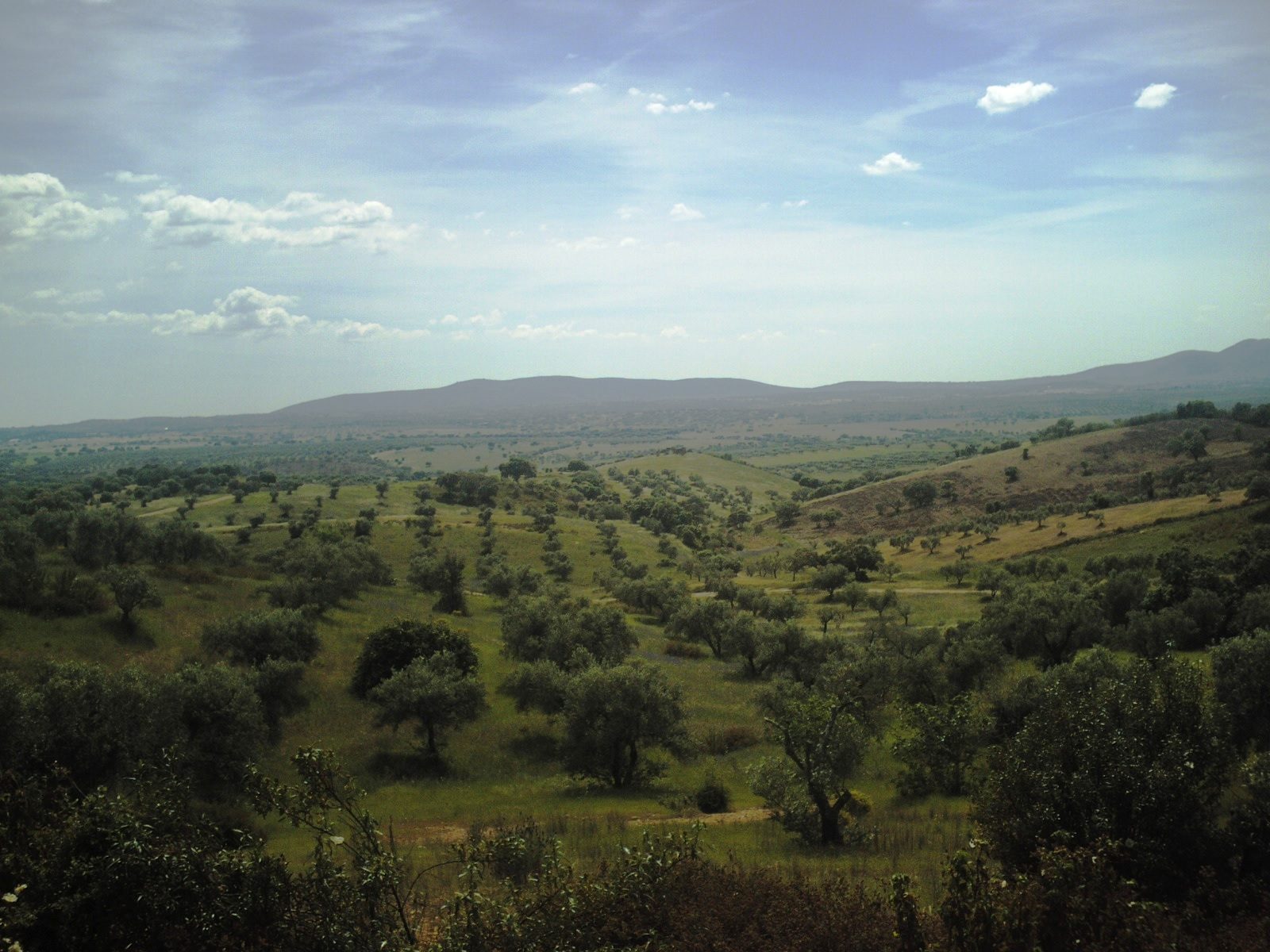
Dry grassland dotted sparsely with thick-trunked, wide-canopied oaks (cork oak, holm oak) at regular intervals, with the undergrowth cleared to look like savanna, means the montado of Alentejo.
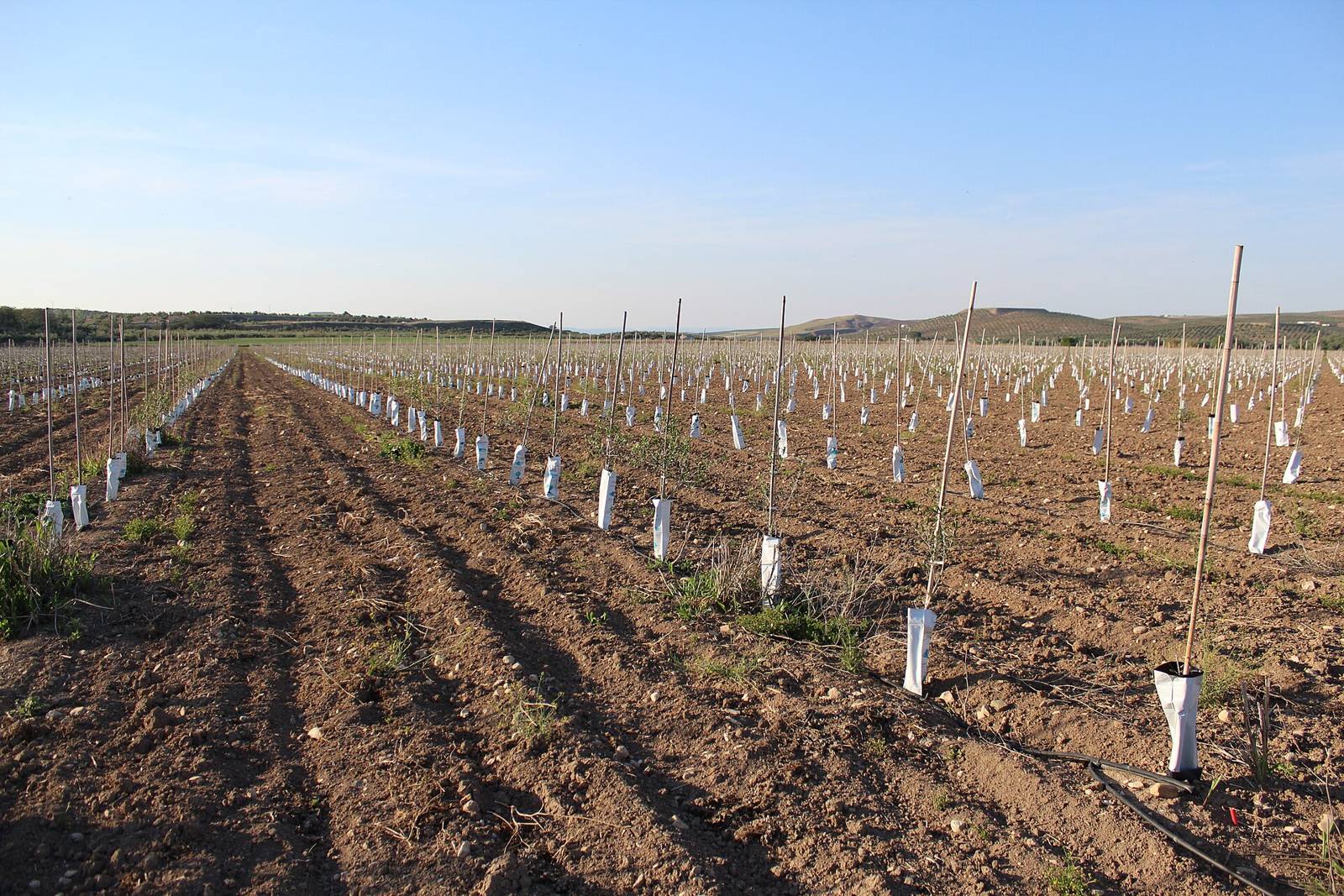
Dense hedgerow-like rows of short olive trees (super-intensive olive groves), with gaps left only between the rows as access paths, spread across reddish-brown flat land, mean the irrigated land around the Alqueva Dam. Black drip-irrigation tubing runs along each row.
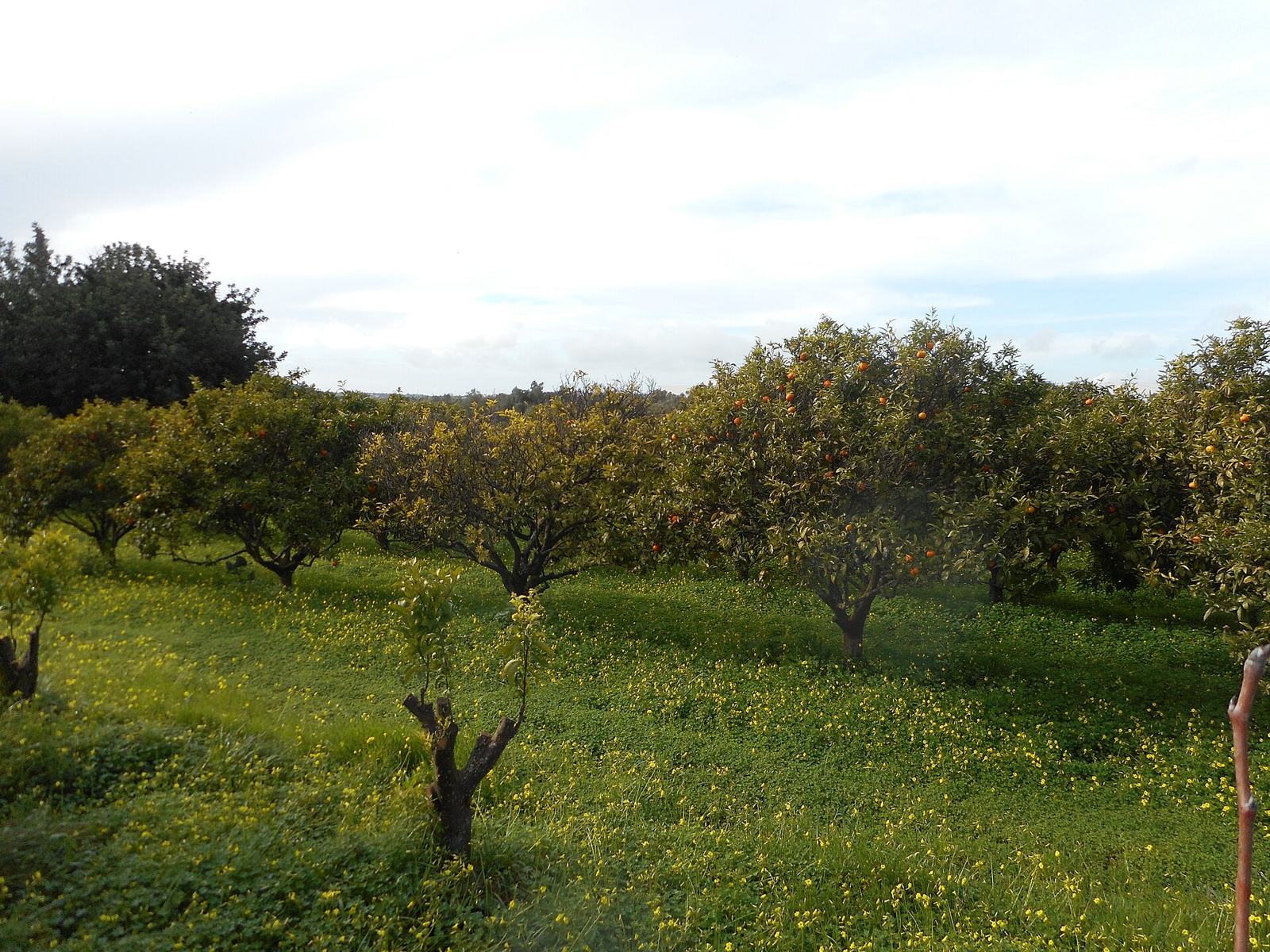
Evergreen orchards of citrus (orange) with uniform, round, dark-green canopies filling a hillside mean the Algarve. It's about the only place in Portugal where citrus appears in a large contiguous block.
Once you know the region: which city or town
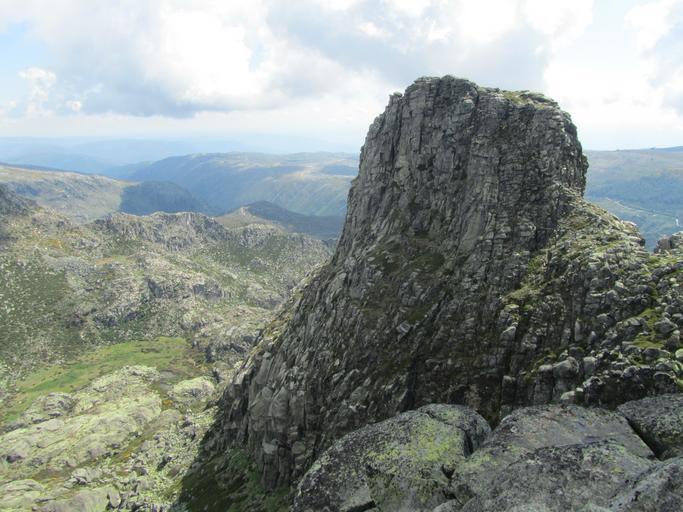
The Serra da Estrela mountains have Portugal's only ski resort, and some roads there have roadside snow poles. Rocks are common along the roadside too.
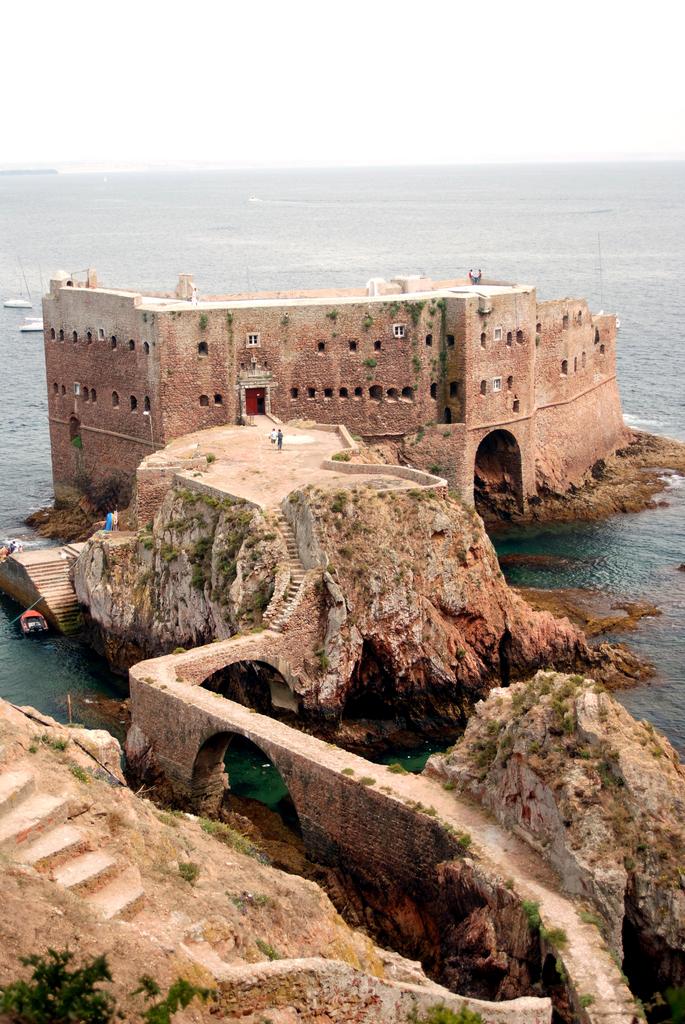
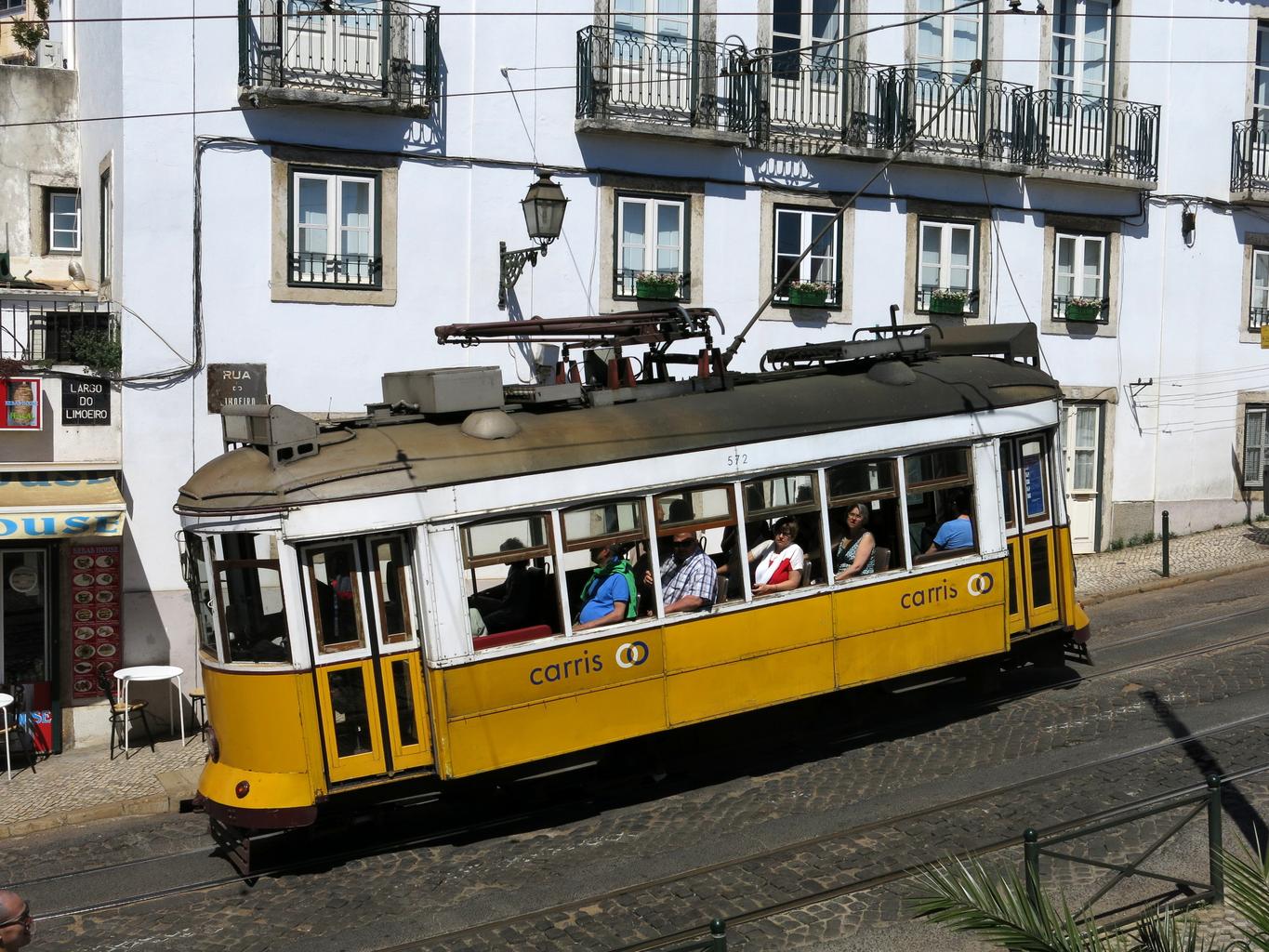
Lisbon has trams run by Carris (Companhia Carris de Ferro de Lisboa), which began operating in 1873.
No clues for this category and place yet.
Hover a region on the map to see its name