 Germany
Easily confused with:Austria, Luxembourg, BelgiumQuizzes for this area:Germany State Quiz, Germany City Quiz, Area code quiz (Germany)
Whole area13
Clues that work anywhere in this area


Language & Script★★★
German-speaking countries use the eszett "ß" as a letter.


Utility Pole★★★
Urban and residential areas have few utility poles.
Photo coming soonUtility Pole
Google Car★★★
Street View coverage was heavily updated in 2023, and it often shows "© 2023 Google." Before that, most coverage had a blocky mosaic look and was only second-generation.
Watch outNearby countries, including Luxembourg, also have areas photographed in 2023, so don't settle on Germany from this alone.
SourcesGoogle to update Street View in Germany this yearSee alsoLuxembourg


Commercial Facilities★★★
There are trucks and mailboxes for DHL Group, the shipping company headquartered in Bonn.
Watch outDHL is one of the largest logistics companies in Europe, so its trucks run in nearly every country.
SourcesDHL Group


Narrowing down the region19
Once you know the area: which part of it
Area Code
Phone area codes narrow down the region
Phone area codes are assigned by region. When a number shows up on a sign, an advert or a van, its leading digits narrow the location down to a part of the country.
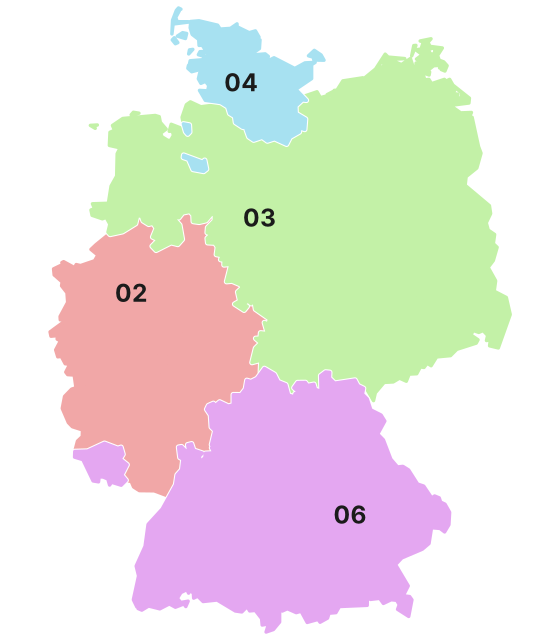 Coloured by leading digit
Architecture
Where Architecture clues apply5
Click an item to jump to its clueTap to show the range; tap again or → to jump to the clue

Building★★★
Streets lined with large apartment blocks may be more common in the east.
Examples12SourcesHoyerswerda


Building★★★
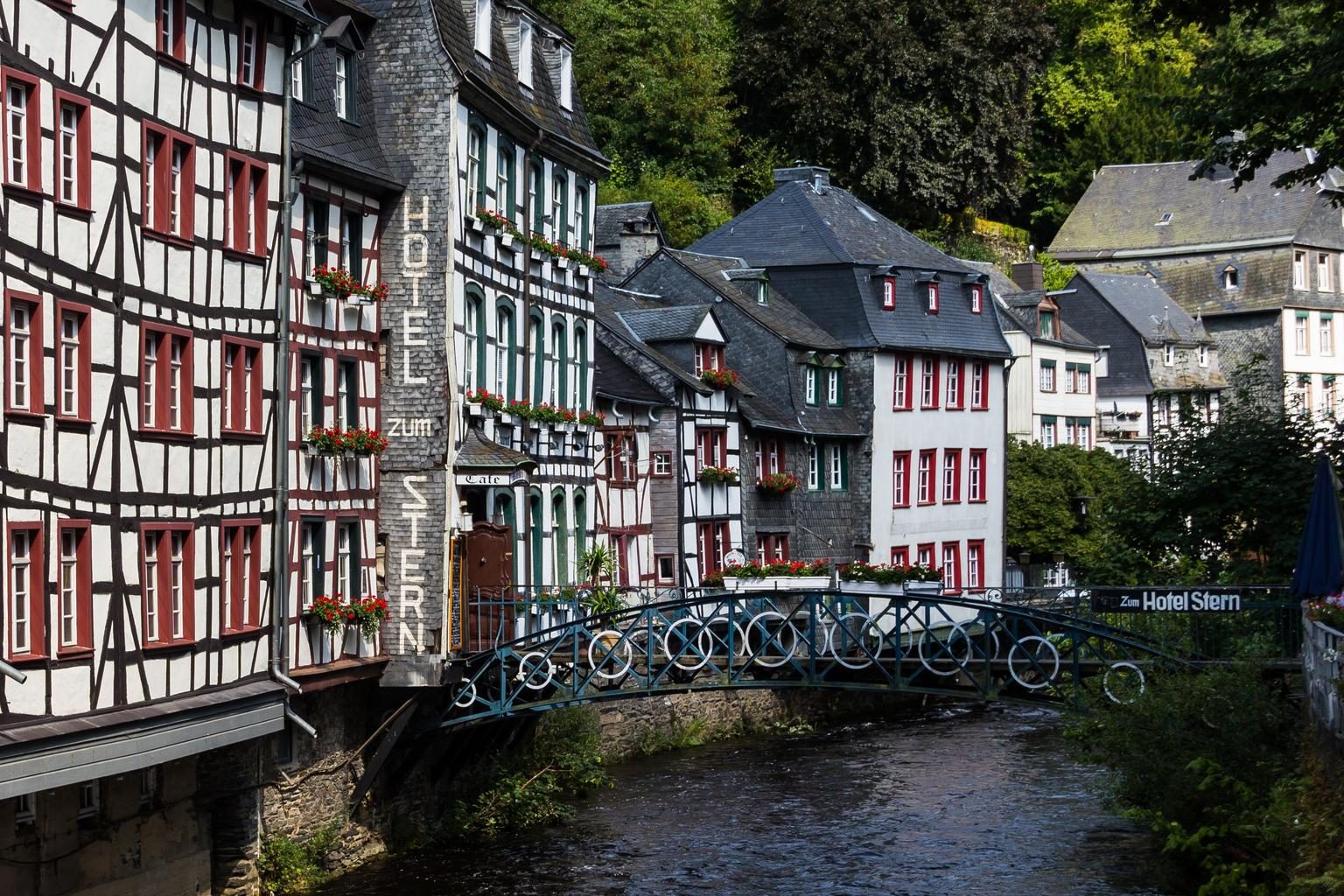
Around the Fell Exhibition Slate Mine in central Germany, houses might often have black roofs.
Watch outAreas of France with slate also have black roofs. The pins on the map were plotted from research into former black-slate mine locations.
Examples1234SourcesFell Exhibition Slate MineDie Schiefervorkommen des Rheinischen Schiefergebirges - Schieferlexikon (deposits of the Rhenish Slate Mountains)Grube Katzenberg - Wikipedia (the slate mine in Mayen)Schiefergrube Staatsbruch Lehesten - Reviersteiger (the slate quarry in Thuringia)See alsoFrance


Building★★★
The Fachhallenhaus house type is found across the northern half of Germany and eastern Netherlands. It's often built of brick.


Place names
Language & Script★★★
Place-name endings (-burg, -dorf, -inghausen, etc.) follow regional patterns.

Terrain
Landscape★★★
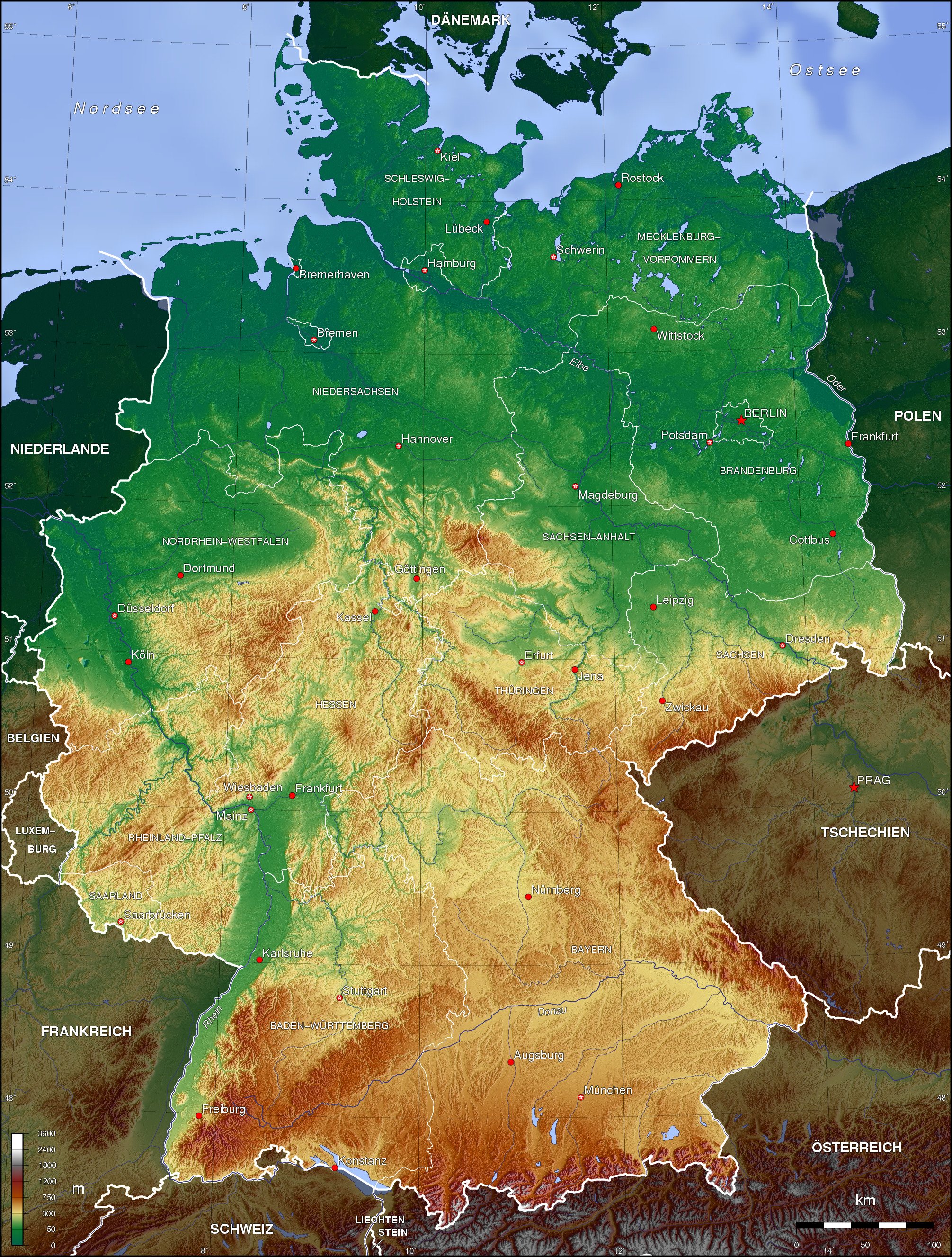
The northern half is mostly flat.
Industry & Resources
Where Industry & Resources clues apply5
Click an item to jump to its clueTap to show the range; tap again or → to jump to the clue
Landscape★★★★
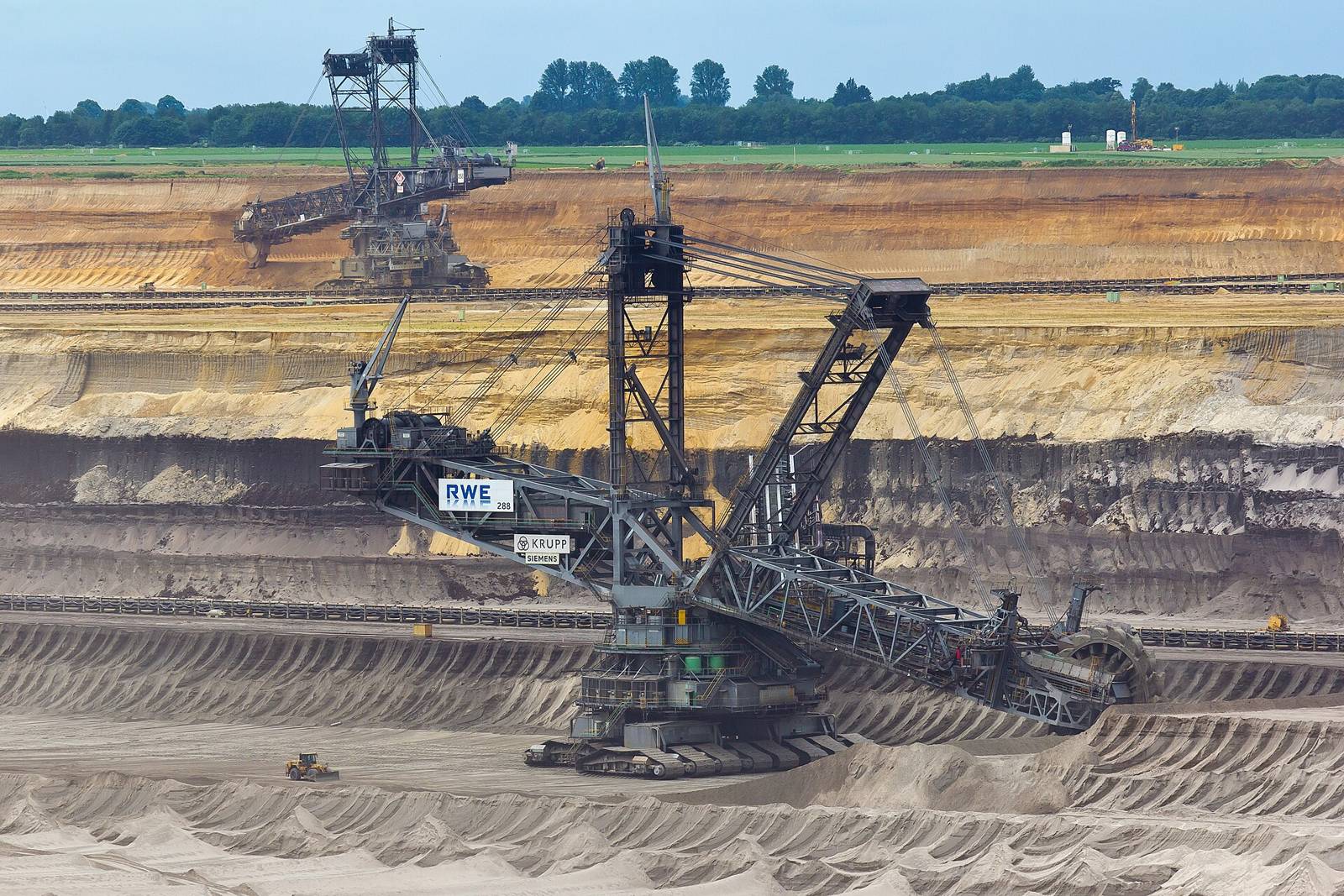
A giant open-cast pit stretching to the horizon, with terraced ochre-colored slopes carved out of it, means a lignite (Braunkohle) mining region. Artificial lakes formed by flooding exhausted pits, and villages relocated into all-new housing, also turn up in these areas.
Examples1SourcesGermany's three lignite mining regions - Clean Energy Wire
- Rhenish lignite area
- Lusatia
- Central Germany
Landscape★★★★
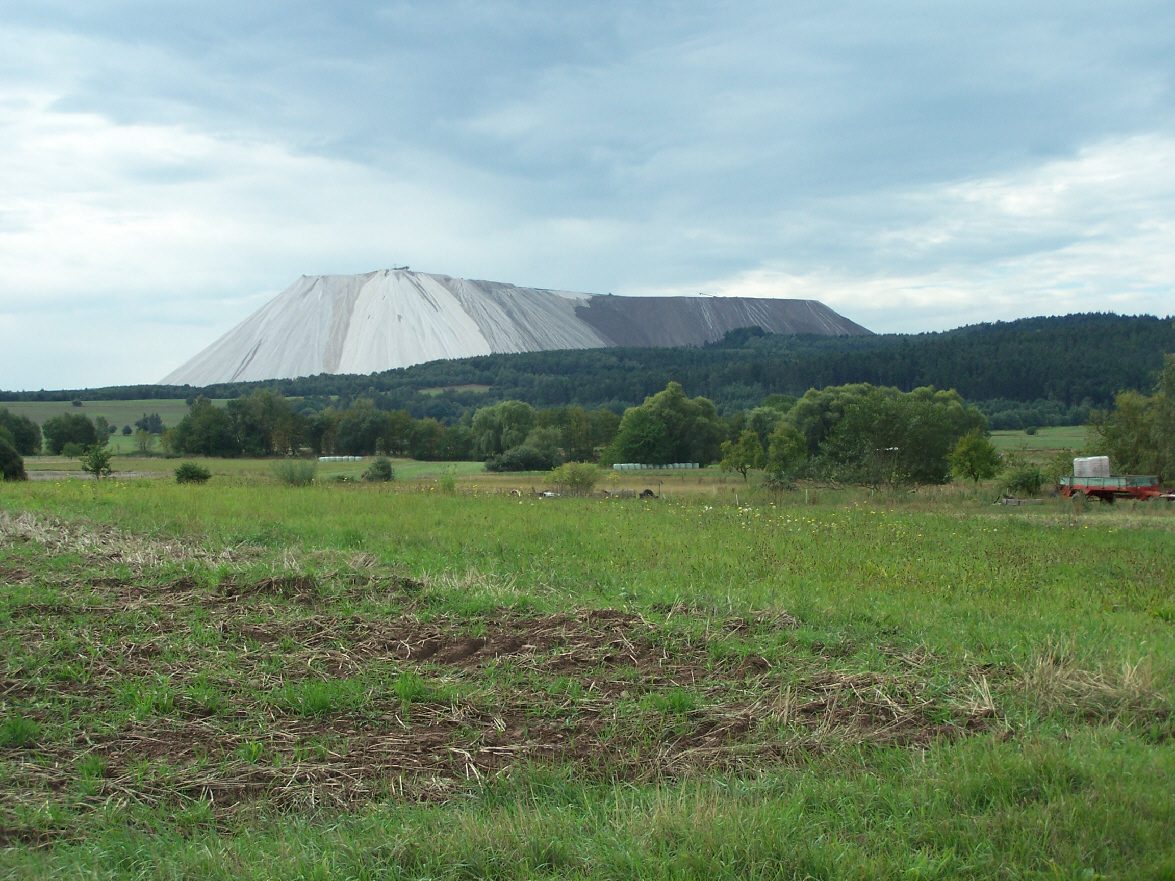
There are rock-salt heaps from the Kali mines in several places. If you remember where they are, you can guess instantly when you see one.
Examples123456SourcesMonte Kali - Wikipedia (location and height)K+S "Europa" (German sites: Werra, Neuhof-Ellers, Zielitz, etc.)
- Neuhof (southwest of Fulda)
- Zielitz (north of Magdeburg)
Landscape★★★
If you see industrial areas or factories, you're probably not in the northeast. The number of industrial workers per 1,000 people varies quite a bit by region.
Photo coming soonLandscape
Landscape★★★
Large chemical plants are common along the Rhine and in the Ruhr industrial region. BASF's headquarters plant is in Ludwigshafen.
Photo coming soonLandscape
Landscape★★★
Rows of wind turbines beyond a field most likely mean the north or center of the country. Turbine density per area is far higher in Schleswig-Holstein than anywhere else, and low in the south, such as Bavaria.
Photo coming soonLandscape
Agriculture
Where Agriculture clues apply4
Click an item to jump to its clueTap to show the range; tap again or → to jump to the clue
Plants & farming★★★★
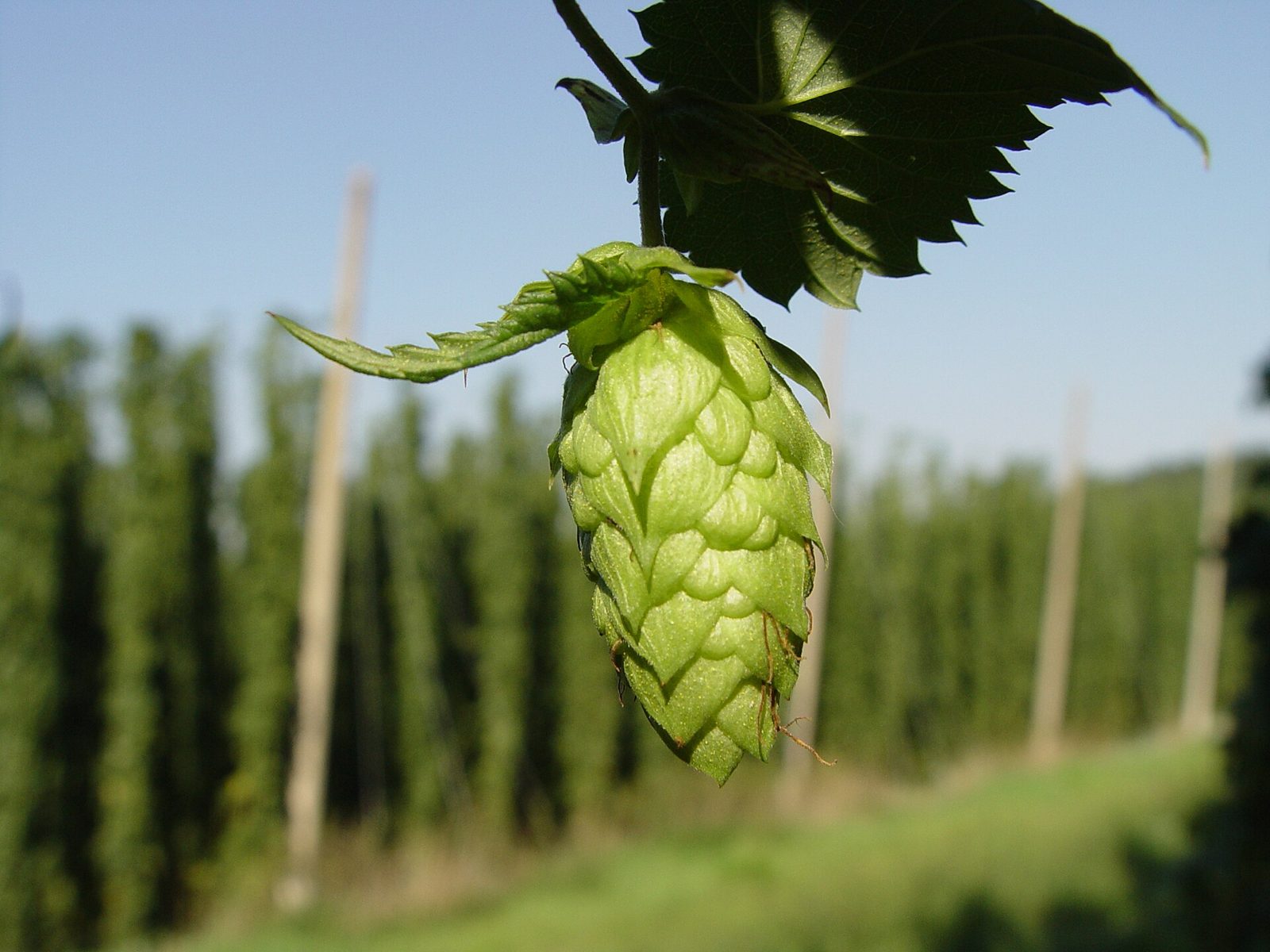
A field of evenly spaced, utility-pole-height posts strung with wire means a hop garden. Over 80% of Germany's hops are concentrated in Hallertau, Bavaria.
TipFrom after the harvest until spring, only the posts and wires stand, looking like a giant bare scaffold.
Examples12SourcesHopfen Anbaugebiet Elbe-Saale (about 1,550ha, farm locations)Hallertau - Wikipedia (the world's largest hop-growing region)Germany - About Hops (area and location by region)
- Hallertau (main producing region)
- Other producing regions
Plants & farming★★★★
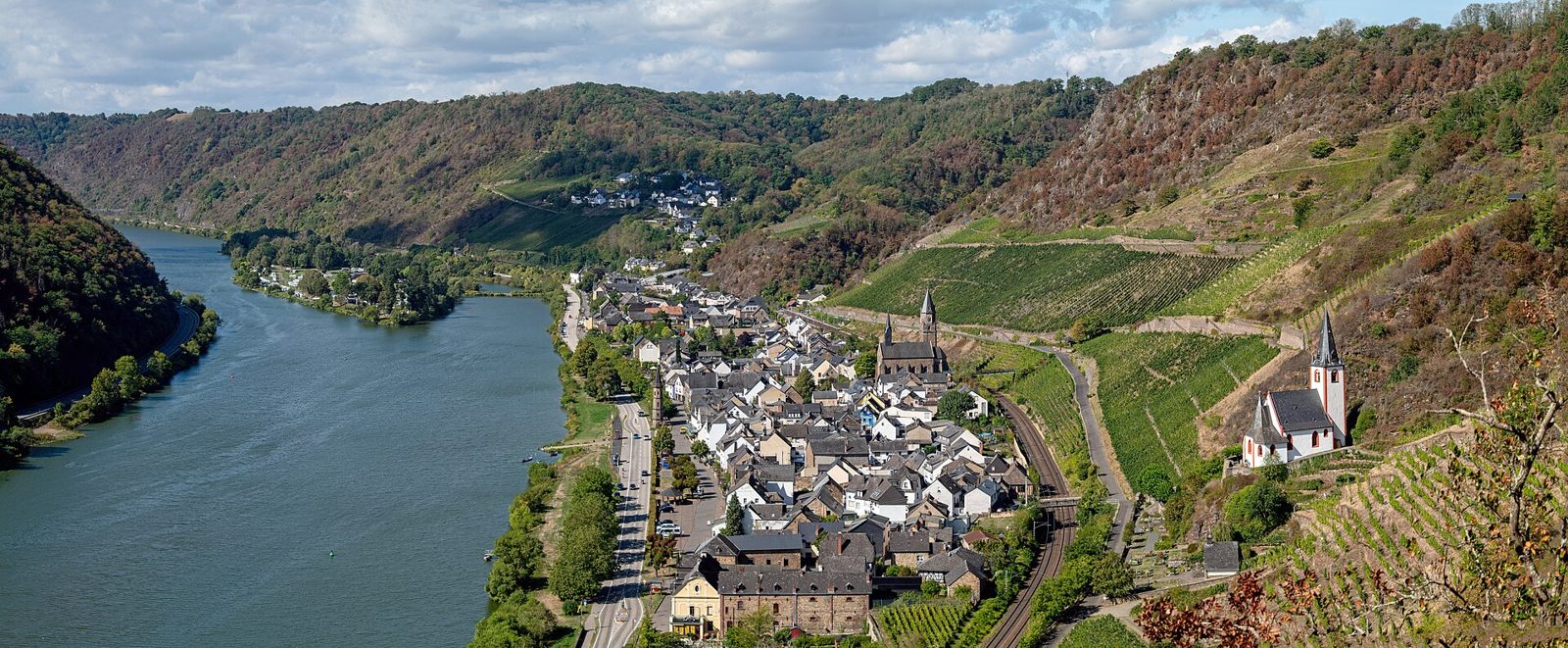
Vineyards filling the whole field of view most likely mean Rhineland-Palatinate. About 60% of German wine comes from here.
Watch outBaden (Baden-Württemberg) and Franconia (northern Bavaria) also have large wine regions, so vineyards alone don't settle it.
Examples12SourcesGerman wine - Wikipedia (area and state of each of the 13 regions)Mosel (wine region) - Wikipedia (steep slopes and slate)
Plants & farming★★★
Fields of yellow flowers (rapeseed) may be more common near the northern peninsulas and the northeast, but they can appear anywhere in the country.
Examples12SourcesAnbaufläche für Winterraps wächst in Deutschland (UFOP, area by state for the 2025 harvest)UFOP-Studie Aussaatfläche von Winterraps (area by state for the 2019 harvest)

Plants & farming★★★
Giant fields stretching to the horizon with no visible boundaries most likely mean former East Germany. Farmland per operation runs 283ha in Mecklenburg-Vorpommern, 278ha in Saxony-Anhalt, 242ha in Brandenburg, and 215ha in Thuringia — 6 to 7 times the figures for Bavaria (38ha) and Baden-Württemberg (37ha) (2023).
SourcesIm Vergleich - Agrarbericht Brandenburg (farmland per operation by state, 2023)Agricultural Production Cooperative - Wikipedia (East Germany's LPGs)
Photo coming soonPlants & farming
Plants & farming★★★
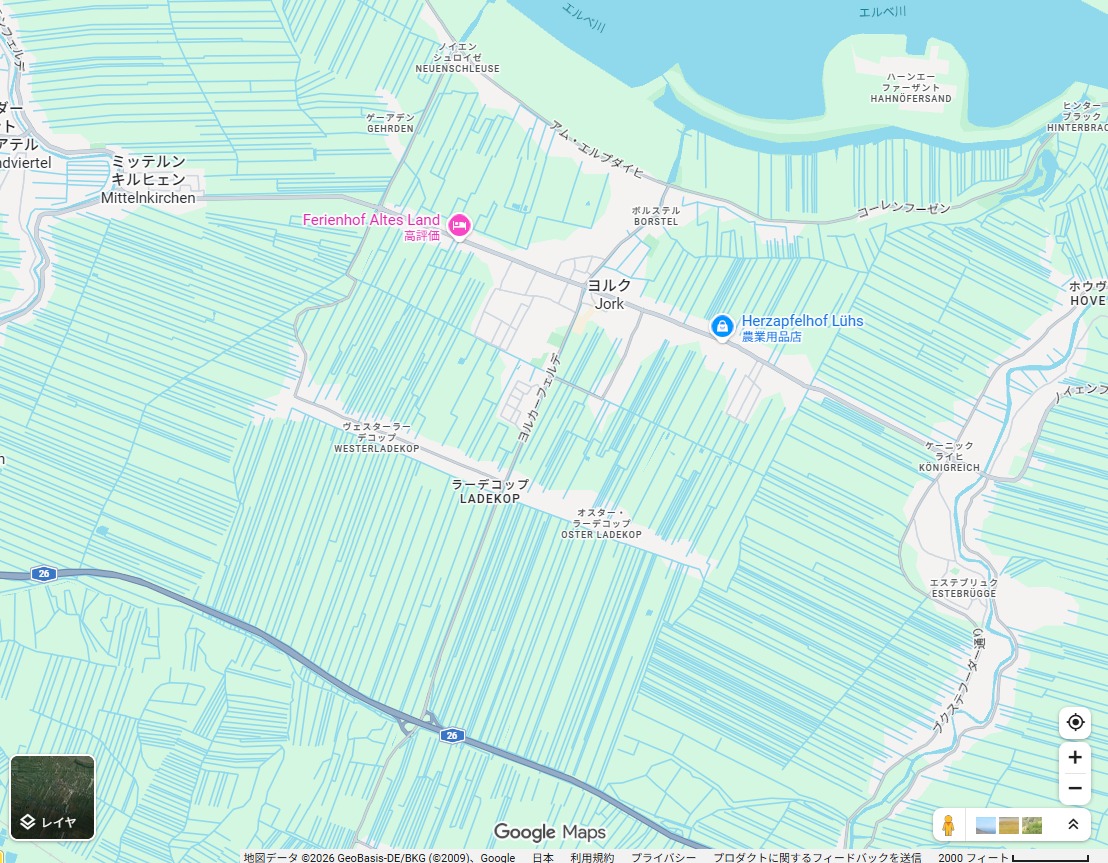
Densely planted rows of short fruit trees on flat lowland, crossed by canals, mean the Altes Land, on the southern bank of the Elbe downstream of Hamburg. It's northern Europe's largest contiguous fruit-growing region, with about 77% of its trees apple and about 13% cherry.
Examples12SourcesAltes Land - Wikipedia (extent and fruit breakdown)
Vegetation
Plants & farming★★★★
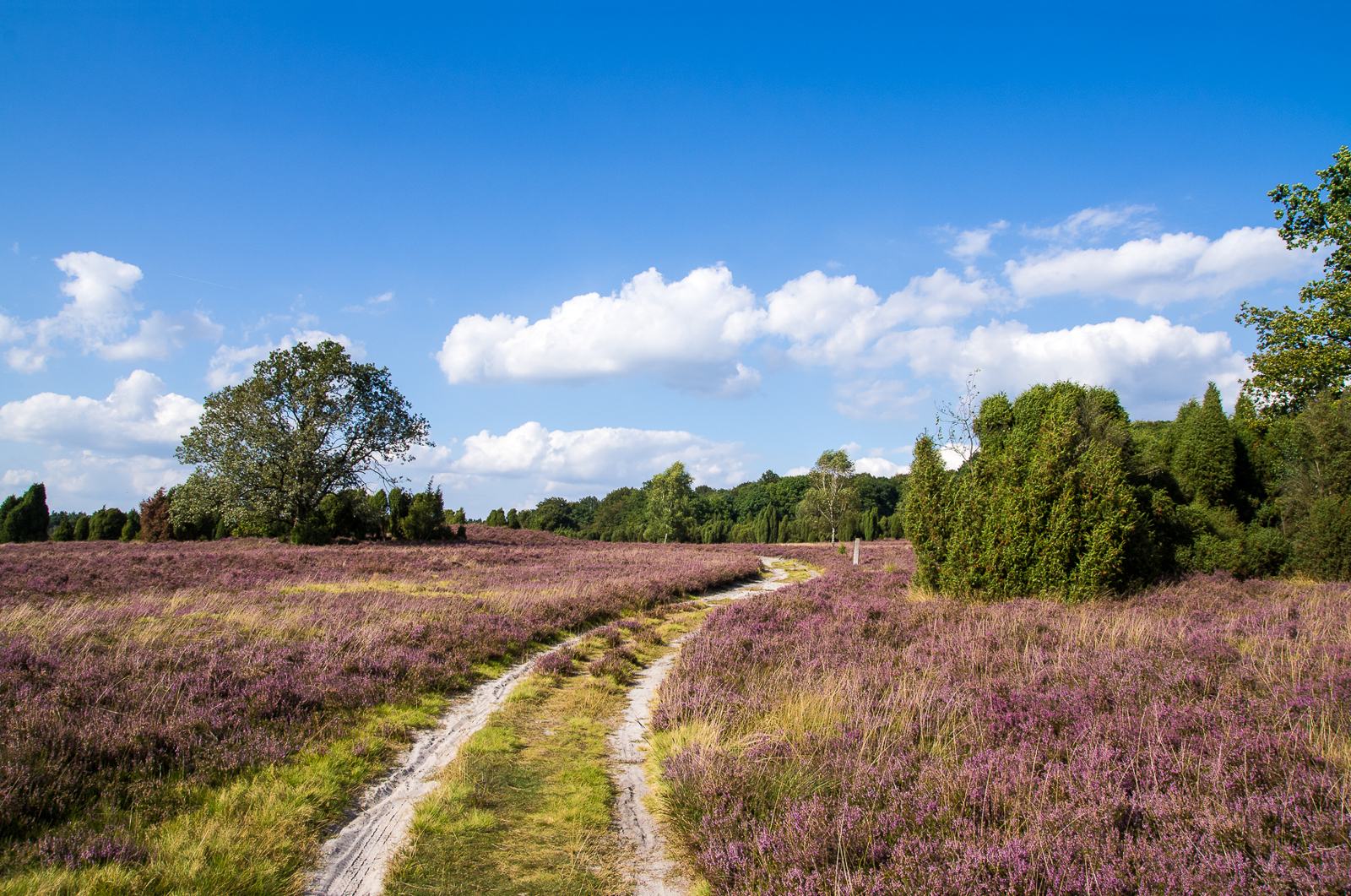
Nearly treeless, gently rolling sandy ground covered in shrubs lower than waist height (turning purple in late summer), with cone-shaped junipers dotted here and there — this is the Lüneburg Heath.
Examples1SourcesLüneburg Heath - Wikipedia (location, vegetation, soil)
- Nature reserve where heathland remains
- Lüneburg Heath
Narrowing down the city5
Once you know the region: which city or town

Street signs
License Plate★★★
Munich's street signs have a blue background, indented corners with dots, and a plate that isn't flat.

License Plate★★★
Cologne's street signs are a simple white plate.

Hamburg

Berlin
License Plate★★★
Street sign shapes vary by city. Berlin's have a white background with a gray border, often fastened with something like a silver zip tie.

No clues for this category and place yet.
Regions
Hover a region on the map to see its nameHover a region on the map to see its name
Basics
General facts about this placeCompanies
Companies with ties to this region. However, this does not necessarily mean they can be used on GeoGuessr.Logos you may spot


- BASF
Germany's largest chemical company; its name comes from Badische Anilin- und Sodafabrik.
- Hapag-Lloyd
One of the world's major container shipping lines, headquartered in Germany.
Nearby areas
A page of play notes and identification clues for GeoGuessr.